
50th International GMP Conference Days 2 and 3 Recap | GKS
50th International GMP Conference Days 2 and 3 Recap | GKS
March 6, 2026
Discuss this article with AI

Event: 50th International GMP Conference
Host: UGA College of Pharmacy
Location: Georgia Center for Continuing Education & Hotel, Athens, GA
Dates: March 4-5, 2026 — Days 2 and 3
Days 2 and 3 of the 50th International GMP Conference brought the deepest technical content of the week. The sessions moved from GMP inspection case studies and quality system theory to a sweeping OPQ update from FDA, and closed with a fireside chat with former FDA Commissioner Robert Califf. This recap covers both days.
Full Conference Agenda
50th International GMP Conference, Full Agenda, March 2-5, 2026
Day 2: March 4
Morning Session 1: Case Studies from GMP Inspections
Speaker: Simone Pitts, FDA Drug Inspectorate
The morning opened with a session grounded in enforcement reality: actual FDA warning letter citations, pulled directly from recent inspections. The focus was on the drug inspectorate specifically, with each case study tied to a documented compliance failure.
Key themes across the case studies:
-
Incomplete investigations. One case centered on a firm that failed to thoroughly investigate unexplained discrepancies related to biological indicator (BI) positives during sterilization. The regulatory obligation is clear: any unexplained discrepancy must be investigated, and the investigation must be thorough.
-
Environmental monitoring failures in sterile manufacturing. A 503(b) outsourcing facility case highlighted plate testing issues in an aseptic processing environment. Colony counting failures in environmental monitoring are not administrative oversights. If contamination goes undetected because counts were not performed correctly, the risk is directly to the patient.
-
The Home Depot bucket. One case study included a detail that drew a reaction from the room: a firm's environmental monitoring setup included a Home Depot bucket as part of the operation. The presence of a dry bucket in that context tells a specific story. A dry bucket where liquid should be collecting means something was leaking and no one in the facility had addressed it, or worse, no one had noticed. It is the kind of observation that shifts a conversation from technical findings to the broader question of whether the quality system is functioning at all.
-
Inadequate 483 responses. Several case studies traced the path from observation to warning letter specifically because the firm's response to the initial 483 was inadequate. The session reinforced that a weak, unsupported, or incomplete response often results in escalation. FDA warning letters remain one of the best learning tools available.
-
Rapid microbial methods. One case touched on the industry shift toward rapid microbial methods (RMM). The session noted that firms adopting RMM are expected to validate those methods rigorously. The move toward faster and more robust testing is positive, but validation expectations have not been relaxed.
Morning Session 2: QMSR Changes for Combination Products and Medical Devices
Speaker: Marie Mathews, Franklin Mathews Group
The QMSR session covered the practical implications of FDA's Quality Management System Regulation for combination products and devices. One point from the Q&A carried real weight: Mathews noted that while a lack of regulatory intelligence may not appear as a standalone 483 observation, it shows. A firm that responds to an inspection finding by claiming ignorance of a guidance document that has been available for several years is signaling exactly the kind of awareness gap that investigators notice and remember.
The broader implication: regulatory intelligence is not a nice-to-have. It is foundational to how firms respond when things go wrong, and it is visible to investigators whether or not it appears on paper.
For more context on QMSR and its enforcement implications, see the GKS QMSR webinar announcement.
Afternoon Session 1: Data Governance and Lean Theory
Speaker: Peter Baker, Live Oak Quality Assurance
This was one of the most thought-provoking sessions of the conference. Baker, a former FDA Drug Investigator of the Year, opened with a direct challenge to a concept that has shaped pharmaceutical quality for over a decade.
"We as an industry have to abolish the term Quality Culture. It's not a meaningful term anymore."
- Peter Baker
The argument: "quality culture" has accumulated so much baggage that it no longer drives behavior. The metric that arguably captured this failure most clearly was the practice of invalidating out-of-specification (OOS) results as a quality KPI. In response to that pressure, some firms created secret folders for trial injections so the OOS results would not appear in the formal system. This is a systemic problem, not an individual one. When firms design KPIs around quality without accounting for how those KPIs change behavior on the floor, they risk pushing problems out of view rather than solving them. A metric that looks good on a dashboard while actual quality degrades is worse than no metric at all.
The session pivoted to Quality Management Maturity (QMM) and Lean theory, drawing a direct line from the Toyota Production System to how pharmaceutical firms should think about process governance. Baker introduced the DOM framework (Design, Operation, Monitoring), now being incorporated into PIC/S guidance and expected in Chapter 4, alongside a HET methodology (Hypothesis, Experimentation, Theory) rooted in the scientific method.
One practical measure he proposed: count how many standalone CAPAs and process improvements are proposed by employees within a calendar year. That number, more than any culture survey or quality metric dashboard, reflects whether the quality system is functioning as designed.
Afternoon Session 2: When Risk is Ignored
Speaker: Ileana Barreto-Pettit, Capitana Audit Solutions
Barreto-Pettit, a former FDA Drug National Expert with a 24-year tenure and one of the first investigators to conduct unannounced foreign inspections, walked through the historical events that reshaped pharmaceutical GMP regulation.
Key case studies covered:
- The heparin contamination crisis (2007): 700 patients suffered severe reactions, 81 died. Root causes included inadequate supplier oversight and weak material testing.
- The NECC compounding pharmacy meningitis outbreak (2012): A 503(b) compounding facility operating at manufacturing scale. 700 patients contracted fungal meningitis. The firm had documented contamination issues and continued production.
- OTC eyedrop contaminations (2023-2024): 14 patients lost vision. Water system failures in a sterile manufacturing environment, where the guidance existed and was available.
The common thread across all of these: risk was known, and was ignored or rationalized. The session introduced the concept of over-reliance on historic performance as one of the primary mechanisms by which risk accumulates. A facility that has never had a contamination event can develop a kind of institutional blindness to the conditions that would cause one.
One framing that resonated: the decisions firms make during impact assessments, not just the adverse events themselves, are where risk lives. The decision to close an investigation without fully characterizing the root cause is a risk decision. The decision not to escalate an environmental monitoring trend is a risk decision.
Afternoon Session 3: Update from the Office of Pharmaceutical Quality
Speaker: Mahesh Ramanadham, Deputy Director, CDER Office of Pharmaceutical Quality
The OPQ update covered a range of current FDA initiatives across quality policy, advanced manufacturing, and the domestic supply chain.
Key points:
-
Quality Management Maturity (QMM) Program: A limited number of establishments are participating in protocol evaluations. The program is generating data on where pharmaceutical quality systems are strongest and weakest, and is informing how FDA thinks about inspection resource allocation.
-
Continuous manufacturing: FDA's investments in continuous manufacturing technology continue, with the agency tracking the impact on product quality and supply reliability.
-
PreCheck pilot program: A program focused on supporting domestic manufacturing investment from the facility design phase through to eventual GMP market entry. PreCheck is tied to the administration's executive order on incentivizing domestic pharmaceutical manufacturing. Applications for the current round closed just days before the conference.
-
FRAME: The Framework for Regulatory Advanced Manufacturing Evaluation, supporting advanced technology adoption in pharmaceutical manufacturing.
-
2026 guidance agenda: Pharma quality and CMC guidance is active. Attendees were directed to FDA's compliance programs and guidance manuals as the authoritative reference for current expectations.
One Q&A exchange worth noting: when asked whether CDER would pursue anything analogous to QMSR for pharmaceutical products, the answer was careful and noncommittal, but the question itself reflects where the industry is heading.
Open Mic: Hot Topics in GxP Regulatory Intelligence
Panel: Sarah Barkow, AstraZeneca; Simone Pitts, FDA; Ivy Sweeney, FDA; Ileana Barreto-Pettit, Capitana
The open mic format generated the most direct regulatory dialogue of the conference. Key exchanges:
On foreign inspections and domestic inspection volume: The panel noted that FDA distinguishes between sterile and non-sterile products when assigning investigators, given the technical specialization required. On whether an increase in unannounced foreign inspections could reduce domestic inspection volume, the panel did not commit to a direct answer, though the capacity question is real.
On regulatory currency and investigator assessments:
Simone noted that one useful reference point for firms is FDA's own compliance program. The agency sets and follows the very standards it enforces, making the compliance program a practical north star for how investigations are conducted and what investigators are looking for.
On whether FDA assesses whether a firm's staff is current with regulations and guidance, Ileana Barreto-Pettit offered a direct answer: FDA does not specifically audit training records for regulatory currency, but the quality unit is examined closely, and what investigators find tells them everything they need to know. She described visiting a facility still conducting process validation according to pre-2011 principles, and noted that inadequate quality unit under 21 CFR 211.22 remains the top citation. Regulatory currency shows up in findings, whether or not it is directly tested.
USP Sessions
Speakers: Margareth Marques and Desmond Hunt, USP
The afternoon closed with two USP sessions covering product-specific quality requirements.
Quality Requirements for Ophthalmic Products (Marques): The session covered USP and FDA standards for topical ophthalmic drug products, including FDA's draft guidance on quality considerations for topical ophthalmic drug products, sterility requirements, and container closure testing.
Particulate Matter in Pharmaceutical Quality (Hunt): The session addressed visible and sub-visible particulate contamination, referencing FDA's inspection guidance for injectable products and ICH Q4B Annex 3 on sub-visible particle testing.
Evening: Celebration Reception at Sanford Stadium
Day 2 closed with a reception at the West End Zone Lounge at Sanford Stadium. The 50th anniversary celebration was a fitting backdrop for the conversations about where pharmaceutical quality has been and where it is going.

West End Zone Lounge, Sanford Stadium, Athens, GA. Day 2 reception for the 50th International GMP Conference.
Day 3: March 5
Morning Session: CDER's Quality Management Maturity Program
Speaker: Nyrma CruzRuiz, FDA CDER (virtual)
The QMM program update provided a detailed look at how CDER is structuring its quality maturity assessments and what the data is showing.
Key points from the session:
- The QMM Program uses a 1-5 rubric to assess how establishments use risk management to inform decision-making. The pre-assessment questionnaire does not factor into scoring but helps orient the evaluation.
- Assessment formats in 2024 have evolved, with post-assessment feedback and the option to develop an improvement plan.
- The lowest-scoring practice areas across participating establishments reveal where the industry has the most ground to cover in genuine quality system maturity.
- On supplier management: the distinction between Tier 1, Tier 2, and Tier 3 supplier oversight is increasingly important. Auditing your Tier 1 supplier is the baseline. Understanding what controls your Tier 1 has in place for their Tier 2 suppliers, and what visibility you have into Tier 3, is where gaps are most commonly found.
Cell and Gene Therapy: Autologous vs. Allogeneic Requirements
Speaker: Rob Piperno Sr., Lachman Consultants
The cell and gene therapy session covered the regulatory and technical challenges specific to autologous versus allogeneic products, with a comparison of FDA and EMA approaches.
Key points:
- FDA's approach tends to be more BLA-process driven, with emphasis on the clinical data package.
- EMA's approach leans more toward facility design requirements.
- Technology challenges in this space remain significant, particularly around manufacturing consistency, characterization, and comparability across batches for allogeneic products.
Fireside Chat: Former FDA Commissioner Robert Califf
Speaker: Robert Califf, MD, Duke University
The conference closed with a fireside chat from former FDA Commissioner Robert Califf, currently at Duke University. The conversation was wide-ranging and candid, covering FDA's institutional culture, the reorganization underway, the inspection program, and the agency's future.
On FDA's character:
"The FDA is really more like an academic institution than anything else."
- Robert Califf
Califf made this observation specifically in the context of how FDA approaches drug and device regulation, where the rigor of scientific review and the depth of technical expertise are the primary tools. The agency's culture is built around that standard. He also acknowledged that the food and tobacco sides of the agency operate differently, in ways that reflect different statutory mandates and levels of resources, and that the academic character he described applies most clearly to the drug and device programs.
On the FDA district office reorganization (ORA to OII):
The reorganization that moved district offices from ORA to OII under the centers was contentious internally. The field offices were resistant. Janet Woodcock, as Deputy Commissioner, drove it forward. Califf's framing: the historic decentralization had left centers with limited authority, and the reorganization was a necessary correction. There was also a straightforward economic dimension. Investigators going into facilities in countries like India or China, often met with anxiety or hostility, need to be among the most skilled and well-compensated people at the agency.
On FDA approval timelines:
The FDA is simultaneously criticized for approving things too quickly and not fast enough. Califf pushed back on both. His view: the system has generally gotten it right. For high-risk diseases with existing treatments, the evidence bar is high. For rare diseases with no alternatives, families have made a considered decision to accept more risk, and the regulatory framework has adapted accordingly. He noted that approximately 60% of approvals are based on a single trial, which generates headlines, but defended this as appropriate given the evidence context.
On reducing animal testing:
Much of Califf's career involved pushing back against what he viewed as redundant or uninformative animal studies. His position is more nuanced than a simple endorsement of animal testing reduction: the goal of preclinical work is to narrow the possibility space before entering humans, and that function is irreplaceable. Eliminating animal studies wholesale misunderstands what that work is for. The push to reduce them is only valid when the studies in question are not doing that work effectively.
On unannounced foreign inspections:
This topic came up directly, and Califf's response added an important dimension to the discussion that began on Day 1 (see our Day 1 recap). His point was practical: you cannot simply walk into a facility in India or China unannounced the way you can in New Jersey. There are logistics, in-country coordination requirements, and realities on the ground that fundamentally change what "unannounced" means in those contexts. This is not an argument against foreign inspections or against the effort to conduct more of them. It is a clarification that the term carries assumptions about operational capacity that do not always hold internationally. The gap between what "unannounced" sounds like and what it requires in practice is real, and GKS's research on the foreign inspection gap documents how significant that gap has become over the past decade.
On reducing regulatory burden:
"Almost all of the regulatory burden is guidance, not regulation."
- Robert Califf
The guidance documents contain most of the specificity, and firms are free to deviate from guidance if they can justify it. His example: risk-based monitoring in clinical trials, where FDA stopped requiring 100% adverse event reporting at 1,500 events. The principle is that quality by design, applied thoughtfully and documented clearly, is a valid path. Politicians calling for less regulatory burden often mean "less accountability," and that is a different thing.
On the QMM program:
When asked whether QMM was designed as an inspection enhancement tool or a business transformation tool, Califf's answer was: both. He credited Janet Woodcock with much of the design. The constraint is not ambition. The FDA has very few attorneys, and enforcement actions require Department of Justice participation with different criteria. The QMM program is partly a recognition that voluntary adoption of better quality systems may produce better outcomes than enforcement alone.
GKS Takeaways: Days 2 and 3
-
Warning letters are the curriculum. Every case study presented on Day 2 was pulled from an actual warning letter. If your quality team is not reading warning letters as a primary source of inspection preparation, they are behind.
-
Quality culture may have run its course. The concept has become so loaded with baggage, including metrics that actively incentivized data manipulation, that the argument for replacing it with something more measurable and less rhetorical deserves serious consideration.
-
The quality unit is the primary target. Inadequate quality unit under 21 CFR 211.22 remains the top citation. Firms operating to outdated standards, whether on validation, environmental monitoring, or process governance, are exposing the quality unit first.
-
The foreign inspection gap is operational, not just political. Califf's comments on the logistics of unannounced foreign inspections add texture to a conversation that is often treated as purely a policy question. The goal and the practical reality are in tension, and that tension has not been resolved.
-
PreCheck and QMM are the programs to watch. FDA is actively building infrastructure to support domestic manufacturing investment and to reward quality maturity with differentiated regulatory treatment. Understanding both programs is increasingly relevant for firms thinking about facility strategy.
-
Modern technology will continue to reshape every workflow. With constant changes in technology, AI, and data systems, the quality unit faces growing pressure to understand, acknowledge, and actively use modern tools. Training on new technology is no longer optional. It is part of what a current, functional quality system looks like.
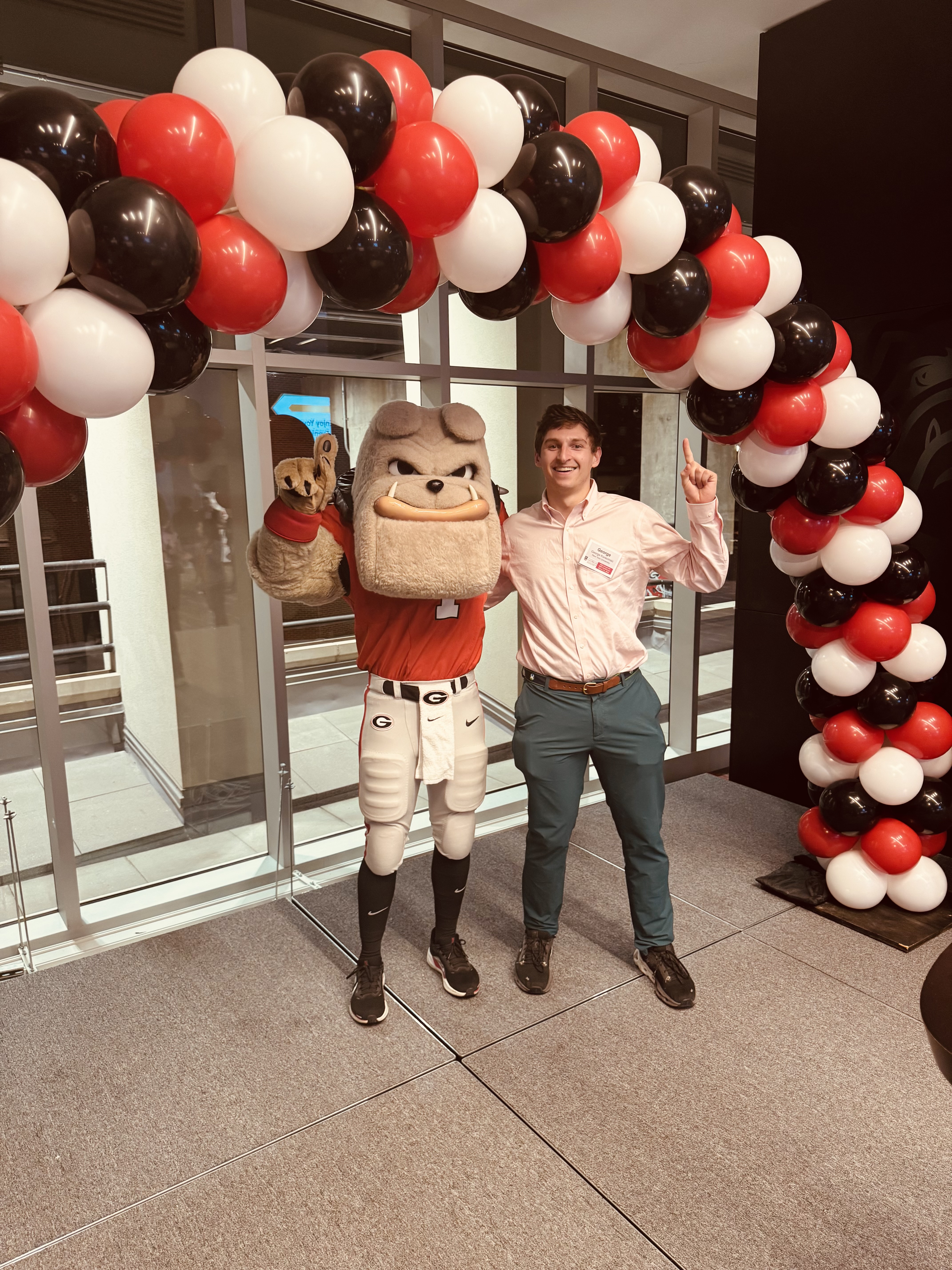
50th anniversary celebration at the 50th International GMP Conference.
Read our Day 1 recap from the 50th International GMP Conference.
Want deviation trend analysis powered by 1.5M+ FDA data points? Explore KeyPedia or request a demo.
Read our research:
- An Analysis of FDA Warning Letter Citations from 2019-2023, J. Pharm. Innov. (2024)
- The Foreign Inspection Gap: FDA GMP Oversight of U.S. Drug Imports, 2014-2024, J. Pharm. Innov. (2026)
For more information or questions, reach us at [email protected].
GKS was present at the 50th International GMP Conference, March 2-5, 2026, Athens, GA.
Try KeyPedia Today
Explore our real use cases and discover our features in depth.
Subscribe to our newsletter
Get the latest updates and insights delivered to your inbox